


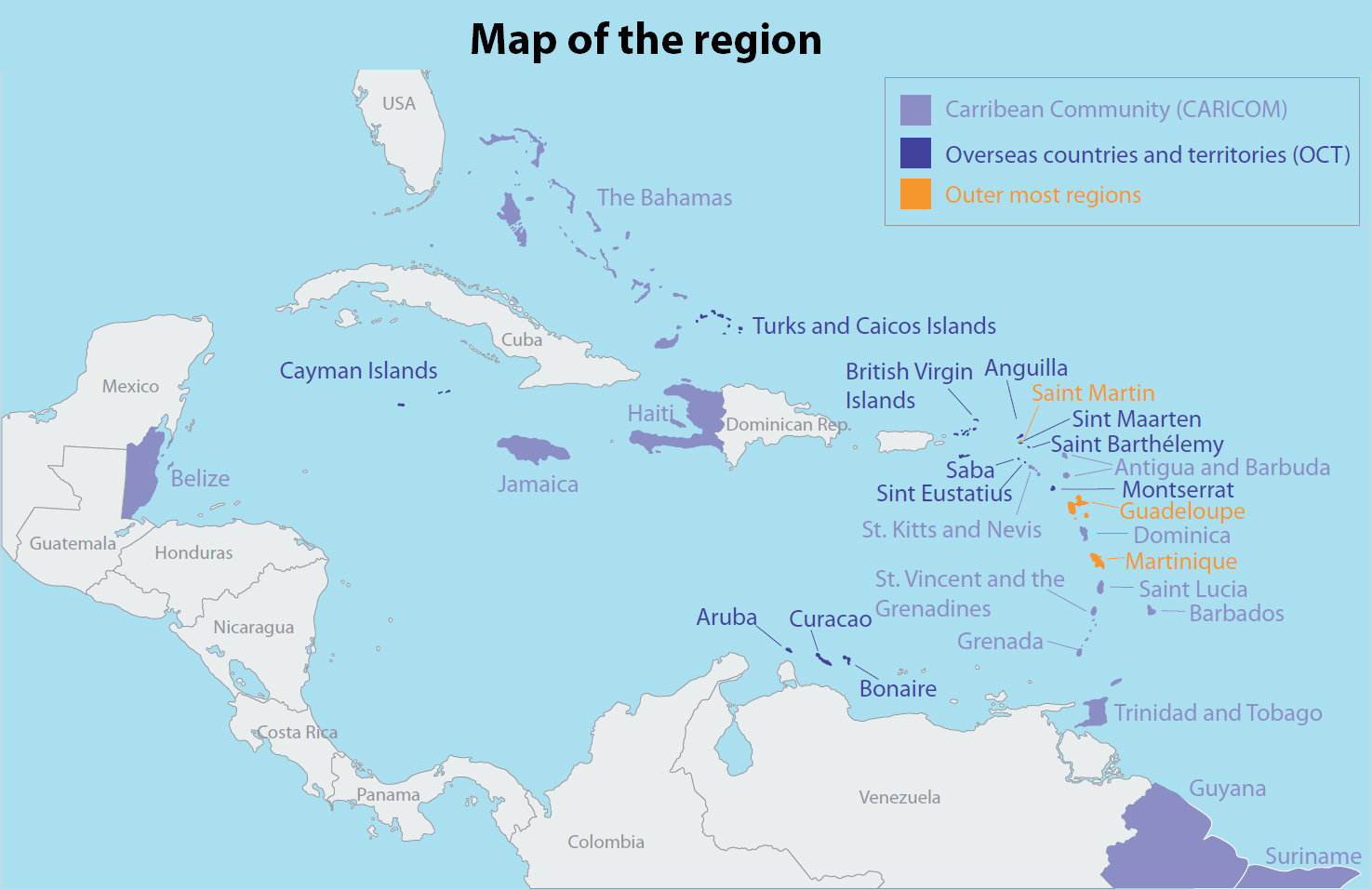
The European Union sees the nations of the Caribbean as important political partners, with cooperation opportunities in a range of different areas, including trade and development.
On the political side, regular and wide-ranging dialogue takes place between the European Union and CARIFORUM, its counterpart in the region. Thematic cooperation also occurs in ad-hoc meetings and multilateral fora. The legal framework for political partnership is set out in the recently agreed Joint EU-Caribbean Strategy, building on the 2006 partnership framework.

Used under licence from Shutterstock.com
The Caribbean is a region of particular significance for EU development policy, with the region receiving €165 million under the European Development Fund from 2008-13. Changes in the current policy and to the status of most Caribbean countries have been suggested, and the impact of this policy shift has aroused strong debate.
The goal of strengthening cooperation and increasing trade with these countries is being achieved thanks to the 2008 EU-CARIFORUM Economic and Partnership Agreement, a comprehensive deal covering trade in goods and services as well as other trade-related issues. Implementation is not yet complete, but the two parties have reaffirmed their commitment to the objectives of supporting sustainable growth, competitiveness and development in the region.
Read the complete briefing here.


Be the first to write a comment.