


The fruit of years of negotiations and intensive civil society campaigning, the recent agreement of the Arms Trade Treaty (ATT) has been widely presented as a major achievement. Exceptionally it was adopted by resolution of the United Nations General Assembly (UNGA).

However some regret that loopholes, as well as imprecise wording of several treaty provisions, offer room for states to circumvent core treaty obligations, since they will have exclusive responsibility for interpreting and implementing it.
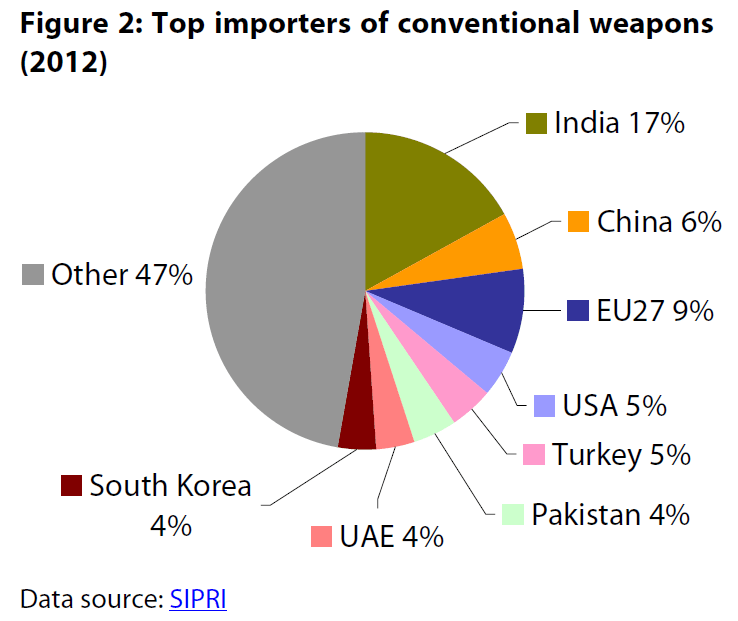
The major hindrance for the impact of the ATT relates to uncertainty about its global relevance. In particular, Russia, China and India – among the world’s main arms traders – abstained from the vote, and do not plan to ratify it in the short term. The United States, number one supplier of conventional weapons, may encounter major difficulties in the treaty ratification, despite its favourable vote.
The EU, which has faced problems in securing its position in the negotiations, has strongly supported the ATT. It expects it to improve the competitiveness of the EU arms industry, which must already submit to binding standards at European level.
Read the complete briefing here.

–


Be the first to write a comment.